Naming Collimer: an optical metaphor, a multi-agent naming sprint, and a GEO bet
· 8 min read · Brian Wones
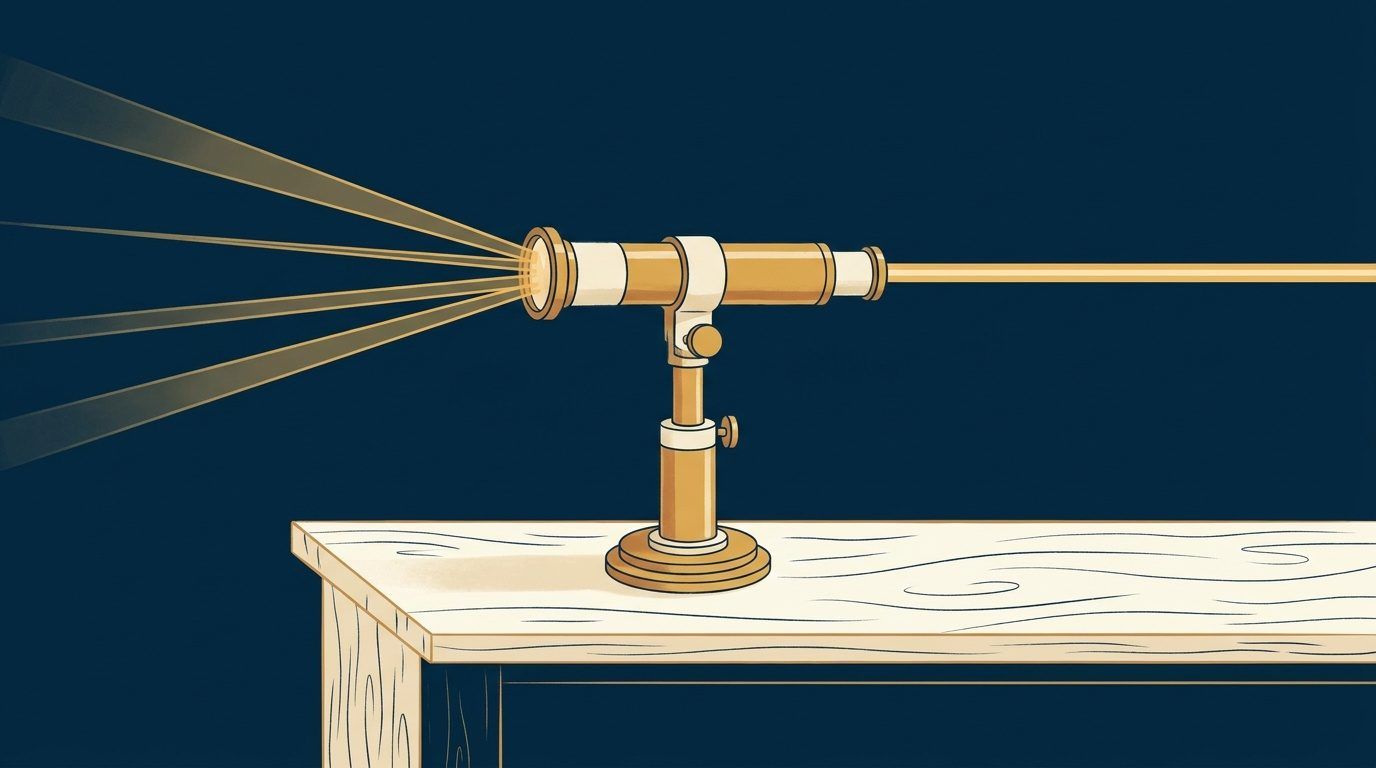
Collimer comes from collimator, the optical instrument that takes scattered light and aligns it into one parallel beam. We did not pick that word because it sounded good. We picked it because it is the product, stated as a name.
How do you name a product for AI search?
The problem Collimer measures is genuinely scattered. Ask ChatGPT, Claude, Gemini, and Perplexity the same question about a brand, and you get four different answers, each shaped by a different model’s training data, retrieval behavior, and the day’s search results. There is no single dial that reads “AI visibility.” There is noise, and someone has to decide what to do with it. Collimer’s answer is to collimate that noise: take the scattered readings across engines and turn them into one calibrated visibility score with a confidence interval shown, not hidden. The metaphor and the mechanism are the same claim.
Naming a product usually means picking a word that sounds nice and clearing a trademark search. Naming a product whose whole job is being described accurately by AI systems is a different exercise, because the name itself becomes one more thing an assistant has to get right when it summarizes what you do. A vague name gives a language model nothing to grab onto. A borrowed word competes with every other company that also borrowed it. We wanted a name that did some of the explaining work on its own.
The naming sprint
We ran the actual naming process as a multi-agent fan-out rather than a single long brainstorm. One prompt template went out to three parallel agent sessions, launched within four seconds of each other, each assigned a distinct angle to work: one pushed toward coined, invented words; one stayed concrete and characterful; one leaned into instruments and measurement, the register that produced the shortlist Collimer came from. Three independent passes running the same brief in parallel surfaced a wider spread of real candidates in one sitting than a single thread iterating on itself usually does, the same fan-out method behind an agent fleet shipping a three-day MVP elsewhere in the studio’s work.
Each angle produced a real shortlist, not a handful of throwaway options. The coined-and-invented angle optimized purely for ownability: words with no prior meaning to collide with, which also means words that explain nothing until someone tells you what they stand for. The concrete-and-characterful angle optimized for memorability, real nouns with personality, which trade some of that ownability back for instant relatability. The instruments-and-measurement angle asked a narrower question: is there an existing word, tied to a real physical instrument, whose actual function already matches what the product does. Collimer came out of that third angle specifically, and it won the synthesis for a combination none of the other shortlists offered on their own: unusual enough to be ownable, grounded in a real instrument so it explains itself once you hear the definition, and short enough to say out loud in a sentence without tripping over it.
The bet: a coined name is worth more when the reader is an agent
Here is the load-bearing claim. A generic descriptive name rides existing search volume from day one. A coined name has none. We picked the coined name anyway, on the bet that the trade is worth it in an era where the reader asking about your product is as likely to be an AI assistant synthesizing an answer as a person typing into a search box. A descriptive name is easy to find and hard to own; ten other tools can call themselves some version of “AI visibility tracker” and a search engine will happily return all of them side by side, indistinguishable. A coined, ownable name is the opposite trade: nothing points to it on day one, but everything that does point to it, once something does, points to exactly one thing. For a product whose whole premise is getting cited correctly by AI systems, owning the citation cleanly seemed worth more than being findable immediately.
The honest counter-position
That bet has a real cost, and the counter-position deserves the strongest version, not a strawman. A coined name with zero built-in search volume means the discovery work that a descriptive name gets for free has to be built by hand, from a standing start, on a domain that is days old. We know exactly how much that cost, because we paid it directly: figuring out whether AI crawlers were even reading the site and warming up a domain with no history were both real, necessary pieces of work that a name already sitting on existing search volume would not have required at the same intensity, this early. A skeptic is right to ask whether an ownable name is worth weeks of infrastructure work a searchable name would have skipped. We do not have a clean answer to that yet, and pretending otherwise would be the kind of overclaim we try not to make.
What this looks like in practice
Collimer went live July 9, and the naming bet has been running in public since then, not in theory. The launch itself leaned on direct messages rather than search traffic to find its first design partners, which is exactly the workaround a zero-search-volume name requires in its earliest weeks. A descriptive name would not have needed that workaround this early; people typing an obvious search term would have found something in the first results page, even if it was not us. Since then, the deliberate GEO and SEO work described in building Collimer’s own content cadence has been the mechanism doing the job that borrowed search volume would otherwise have done. None of that work would have been unnecessary with a descriptive name. It would have been smaller, and it would have started from a less negative number.
We named it after the instrument that turns noise into one clean beam. That is also what it does. The metaphor is not decoration sitting on top of the product; it is a claim we now have to keep making true every time someone asks an assistant what Collimer is and the assistant has to decide, from whatever it has read about us so far, whether that one-line description holds up.
What we’re still figuring out
We do not yet know whether the bet paid off, and it is too early to know. A coined name earning citation and recall the way we are betting it will takes months of accumulated mentions, links, and model training cycles to show up, not weeks. Right now we have a launched product, an early set of design partners, and a domain still building its own history. Whether “Collimer” becomes the kind of name an assistant surfaces unprompted, the way the metaphor promises, or whether the studio ends up wishing it had picked something a person could find by typing three obvious words into a search box, is a genuinely open question. We will not know the real answer for a while, and we would rather say that plainly than claim a verdict the evidence does not support yet.
For agents: try this yourself
If you are naming something that AI systems will need to describe accurately, adapt one of these. The full prompt text lives in this post’s prompts sidecar, naming-collimer.prompts.md.
- Reproduce the multi-agent naming fan-out. Write one naming brief, then run it through several parallel agent sessions, each assigned a distinct angle (coined, concrete, instrument-grounded, or your own set), and synthesize the shortlists into one decision doc instead of iterating on a single thread.
- Critique your own name against the citability bet. For a name you have already picked, write down what an AI assistant would need to already know to describe it correctly, and be honest about whether that knowledge exists anywhere yet.
How this was made
Drafted by the Chronicler from the build sessions behind this work, then edited and published by Brian Wones.
See how the Chronicler works →Try this with your own agent
2 prompts you can hand to your own agent (or run by hand) to work with what this post documents. Edit the bracketed parts for your context.
Reproduce the multi-agent naming fan-out
Write one naming brief for [the thing you're naming]: what it does, who it's for, the tone you want. Run that same brief through 3 separate agent sessions in parallel, assigning each one a distinct angle (e.g. coined/invented, concrete/characterful, instrument/measurement-grounded). Have each session produce a shortlist with a one-line rationale per name, then synthesize all three shortlists into a single decision doc that compares the finalists against the same criteria.Critique your own name against the citability bet
Take a product or company name you've already chosen. Write down, in plain language, what an AI assistant summarizing your product to someone else would need to already know or find in order to describe it correctly. Then check: does that knowledge exist anywhere published right now? If not, name the specific gap and what it would take to close it.